

Gold Medals Down 32 to 169… China Keeps Top Spot in Asian Games Overall Medal Table
In the 2026 Asian Games overall medal table, China held on to first place. With 169 gold medals, it was 32 fewer than in Hangzhou, and its margin over Japan was 86.
Translated from Korean with AI assistance. Read the original. Sources and original publication dates are retained.
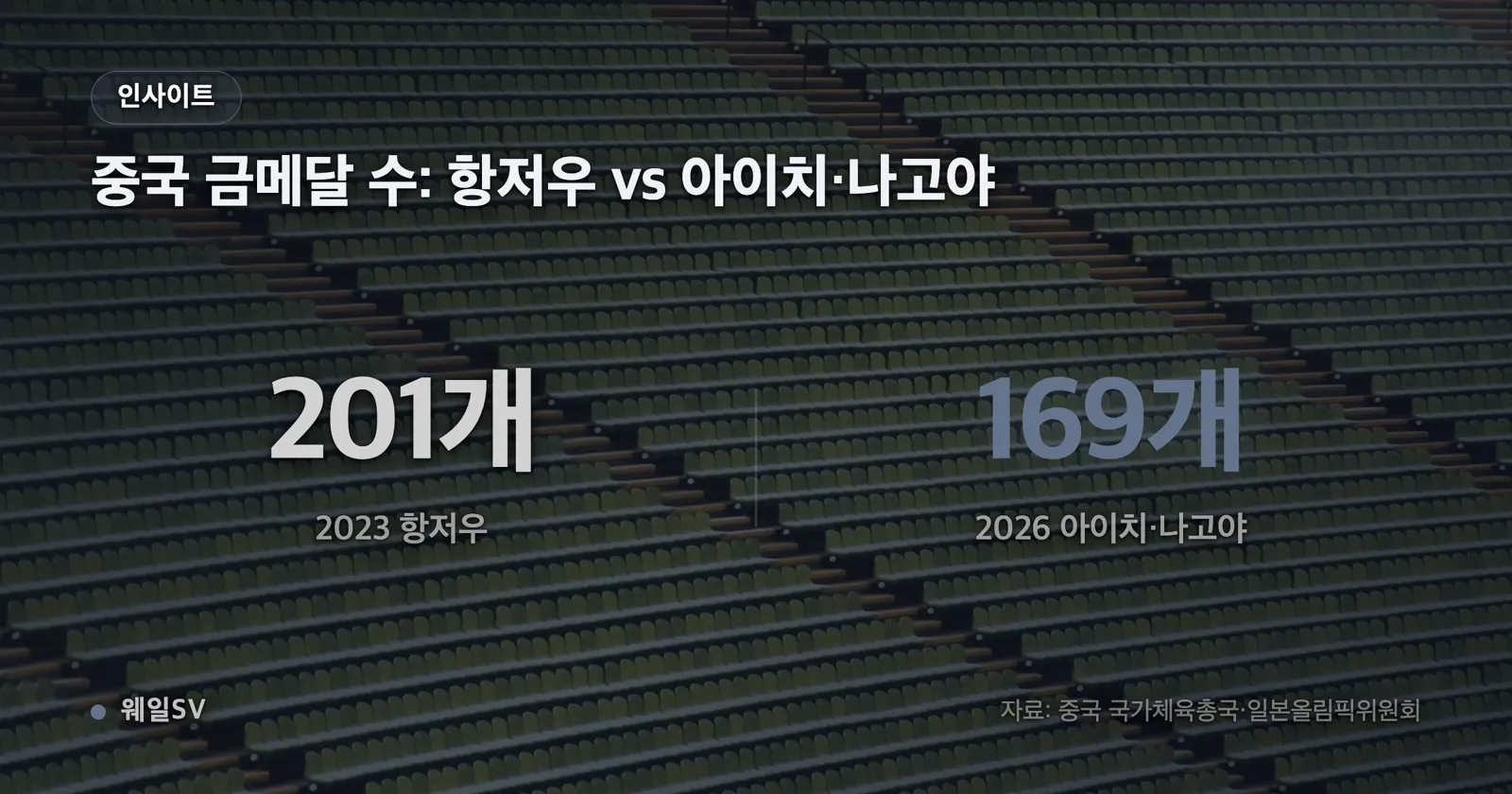
169 gold medals. This is the number of gold medals China won at the 2026 Aichi-Nagoya Asian Games. It is more than double Japan's 83 in second place, and 4.3 times South Korea's 39 in third. Three years ago in Hangzhou, however, China had taken 201 gold medals. It stayed in first place, but its gold count fell by 32.
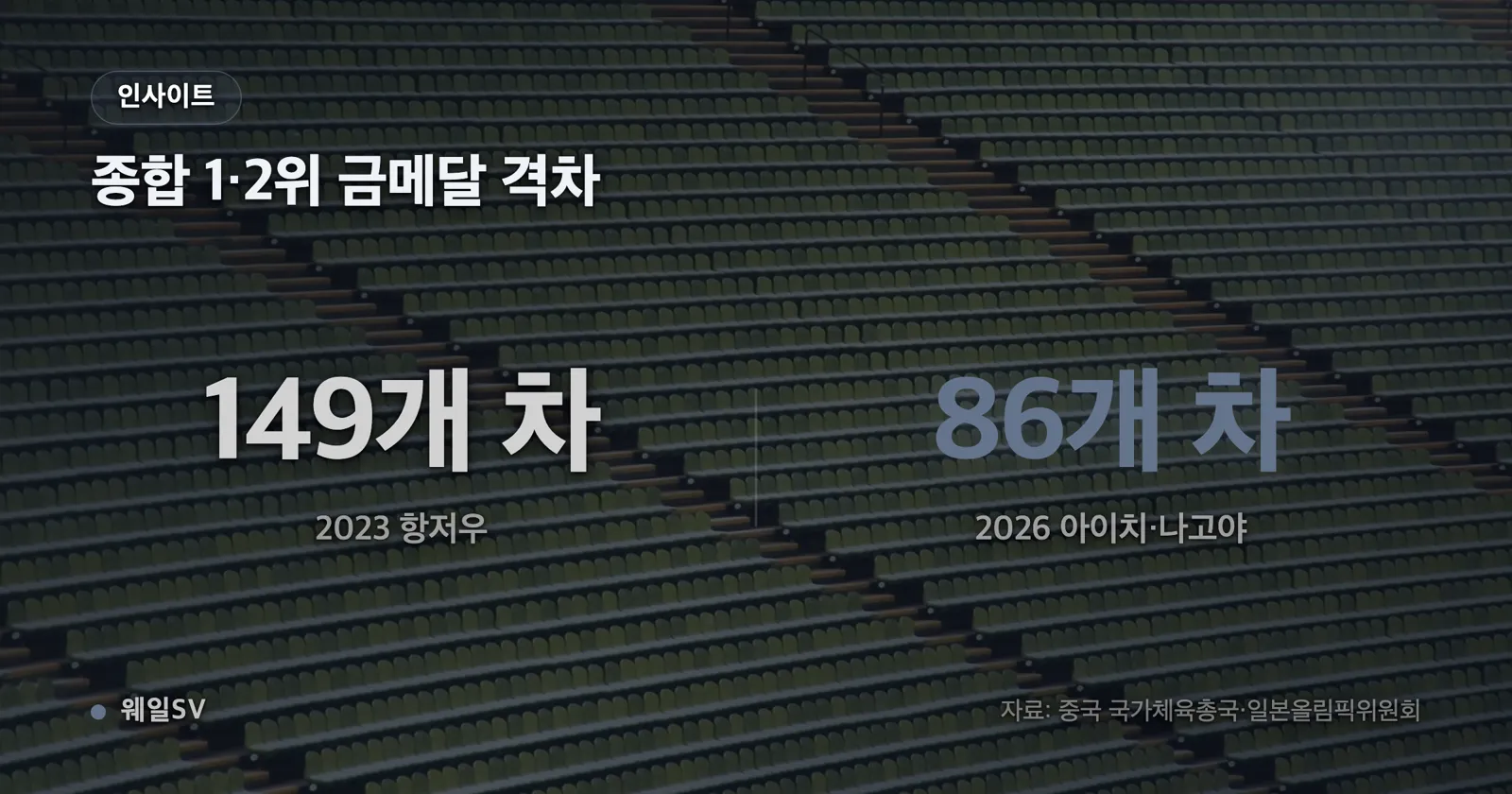
First, let's go back to the tally as of October 8, 2023. In the final Hangzhou Games tally that China's General Administration of Sport and Xinhua News Agency published on October 9, 2023, China won 201 gold, 111 silver and 71 bronze, for 383 medals in total. Japan was second with 52 gold, and South Korea third with 42 gold. The gold medal gap between China and Japan alone was 149. It was less a competition than a runaway.
Asian Games Medal Table: China 169 Gold, Japan 83, South Korea 39
Three years later, on October 4, 2026, the Aichi-Nagoya Games came to a close with the closing ceremony. The Korea Times relayed Yonhap News' closing coverage, which shows that China finished first in the overall medal table with 169 gold medals. Japan was second with 83 gold, and South Korea third with 39. The Japan Olympic Committee reported after all events had ended that China's final results were 169 gold and 341 total medals, and that the composition, including 89 silver and 83 bronze, is confirmed by the State Council Information Office of China announcement.
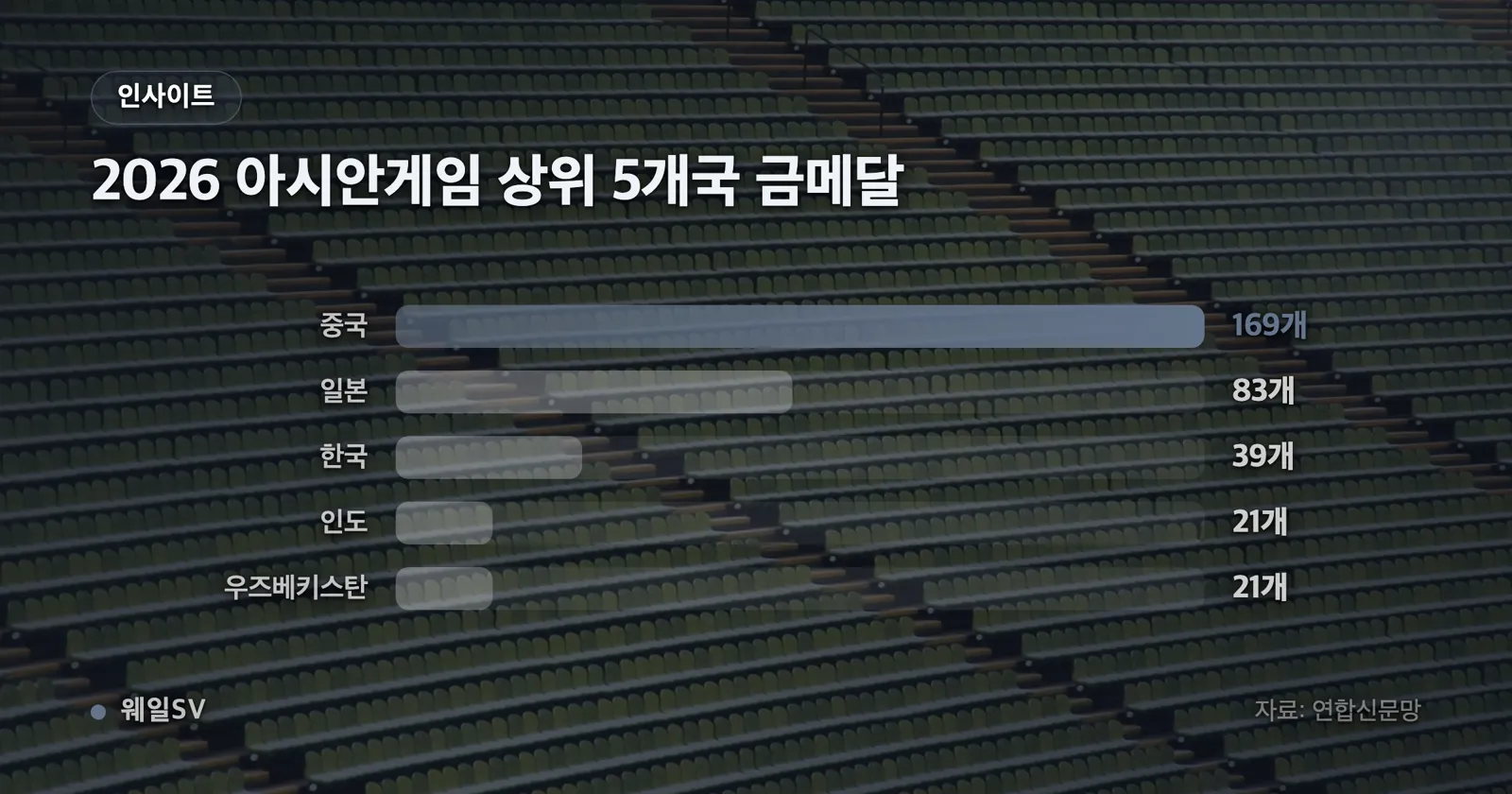
The table below is taken from Yeonhap Sinmunmang's most recently updated medal table, listing the top five countries (final tally as of the October 4, 2026 closing). Overall ranking is decided first by gold medal count, not total medals. Fourth-place India and fifth-place Uzbekistan both had 21 gold medals. The tie was broken by silver: India had 27 to Uzbekistan's 25, so India ranked higher.
Final Overall Standings at the 2026 Aichi-Nagoya Asian Games (Top 5 Countries)
| Rank | Country | Gold | Silver | Bronze | Total |
|---|---|---|---|---|---|
| 1 | China | 169 | 89 | 83 | 341 |
| 2 | Japan (host) | 83 | 95 | 91 | 269 |
| 3 | South Korea | 39 | 43 | 68 | 150 |
| 4 | India | 21 | 27 | 37 | 85 |
| 5 | Uzbekistan | 21 | 25 | 24 | 70 |
The top five countries' gold medals add up to 333. Of those, 169, or 50.8%, went to China. Even combined, Japan's and South Korea's gold medals total 122, which is 47 fewer than China's.
China's Medal Mix Shifts from 201 Gold in Hangzhou to 169
| Games | Gold | Silver | Bronze | Total | Gold share |
|---|---|---|---|---|---|
| 2023 Hangzhou | 201 | 111 | 71 | 383 | 52.5% |
| 2026 Aichi-Nagoya | 169 | 89 | 83 | 341 | 49.6% |
| Change | −32 | −22 | +12 | −42 | −2.9%p |
Broken down by color, the medal losses were not even. Gold fell from 201 to 169, down 32, and silver fell from 111 to 89, down 22. Only bronze rose, from 71 to 83, up 12. These changes are simple differences between the Aichi-Nagoya tally from the Japan Olympic Committee and China's General Administration of Sport's final Hangzhou tally.
Gold fell by more. Of 201 gold medals, 32 were lost, a 15.9% drop, while of 383 total medals, 42 were lost, an 11.0% decline. As a result, gold's share of all medals fell from 52.5% in Hangzhou (201÷383) to 49.6% (169÷341), dropping below half.
Gold Medal Gap Among China, Japan and South Korea Narrows From 149 to 86 as Only Japan Grows
| Country | 2023 Gold | 2023 Total | 2026 Gold | 2026 Total | Gold change | Total change |
|---|---|---|---|---|---|---|
| China | 201 | 383 | 169 | 341 | −32 | −42 |
| Japan | 52 | 188 | 83 | 269 | +31 | +81 |
| South Korea | 42 | 190 | 39 | 150 | −3 | −40 |
China was not the only country to lose medals. South Korea's gold fell from 42 to 39, down 3, and its total fell from 190 to 150, down 40. By contrast, Japan's gold rose from 52 to 83, up 31, and its total rose from 188 to 269, up 81. Of the three countries, Japan was the only one whose medal count increased.
Looking at the gap as a ratio, the change is clearer. In Hangzhou, China's gold count was 3.9 times Japan's (201÷52), but this time it is 2.0 times (169÷83), so the ratio fell. The gold medal gap narrowed from 149 to 86 by 63. Between Japan and South Korea, the opposite happened: the gap widened from 10 to 44.
32 Fewer Gold Medals: What Is Confirmed and What Is Not
So why did it fall? Only one thing can be confirmed in the numbers. In this medal table, Japan is listed as the host, and Hangzhou, where the previous Games were held, is a city in China. As the host location moved from China to Japan, China's gold medals fell by 32 and Japan's rose by 31. The two trends coincided, but this data contains no evidence that the change of host location caused them.
Event composition, hosting conditions and similar factors require further verification. This is why the drop in gold medals alone cannot be used to conclude that competitive strength weakened. We also did not cover the breakdown of medals by sport, because it was not obtained in this final tally. The overall medal table and world rankings by sport are different indicators and should be viewed separately.
We also note the differences between data sources. The number of participating countries is listed differently by each source, so we did not adopt a confirmed figure and did not use one in this article. The Indian Olympic Association's table states that it draws on Wikipedia data, so we did not treat it as an independent official primary tally.
Because this table is the final tally after the Games ended, it does not change often (as checked at 01:00 on October 14, 2026). However, if post-event disqualifications or medal reallocations are announced, it will be revised, and a comparison table will be added once the next Games end. China's national team prize money and bonuses are not included because we could not confirm the finalized amounts. The China-Japan gold ratio fell from 3.9 times in Hangzhou to 2.0 times at this Games.
Frequently Asked Questions
Q. What place did China finish in the Asian Games?
In the final tally of the 2026 Aichi-Nagoya Asian Games, China finished first overall with 169 gold, 89 silver and 83 bronze, for 341 total medals. At the previous 2023 Hangzhou Games, China also finished first, with 201 gold and 383 total medals.
Q. What was South Korea's rank and medal count at the Asian Games?
South Korea finished third overall at the 2026 Games with 39 gold, 43 silver and 68 bronze, for 150 total medals. At the Hangzhou Games, it also finished third, with 42 gold and 190 total medals.
Q. How are Asian Games medal rankings determined?
Rankings are determined first by gold medal count, and if gold medals are tied, by silver medal count. At the 2026 Games, India and Uzbekistan were tied with 21 gold medals each, but India, with more silver, placed fourth. At the Hangzhou Games, South Korea had more total medals than Japan but fewer gold medals, so it placed third.
Related Official Websites
- Aichi-Nagoya Asian Games Organizing Committee — Official information and results for the 2026 Games
- Japan Olympic Committee Aichi-Nagoya Games Guide — Host nation team records and Games information
- Olympic Council of Asia Hangzhou Games Official Records — Original final medal table of the previous Games
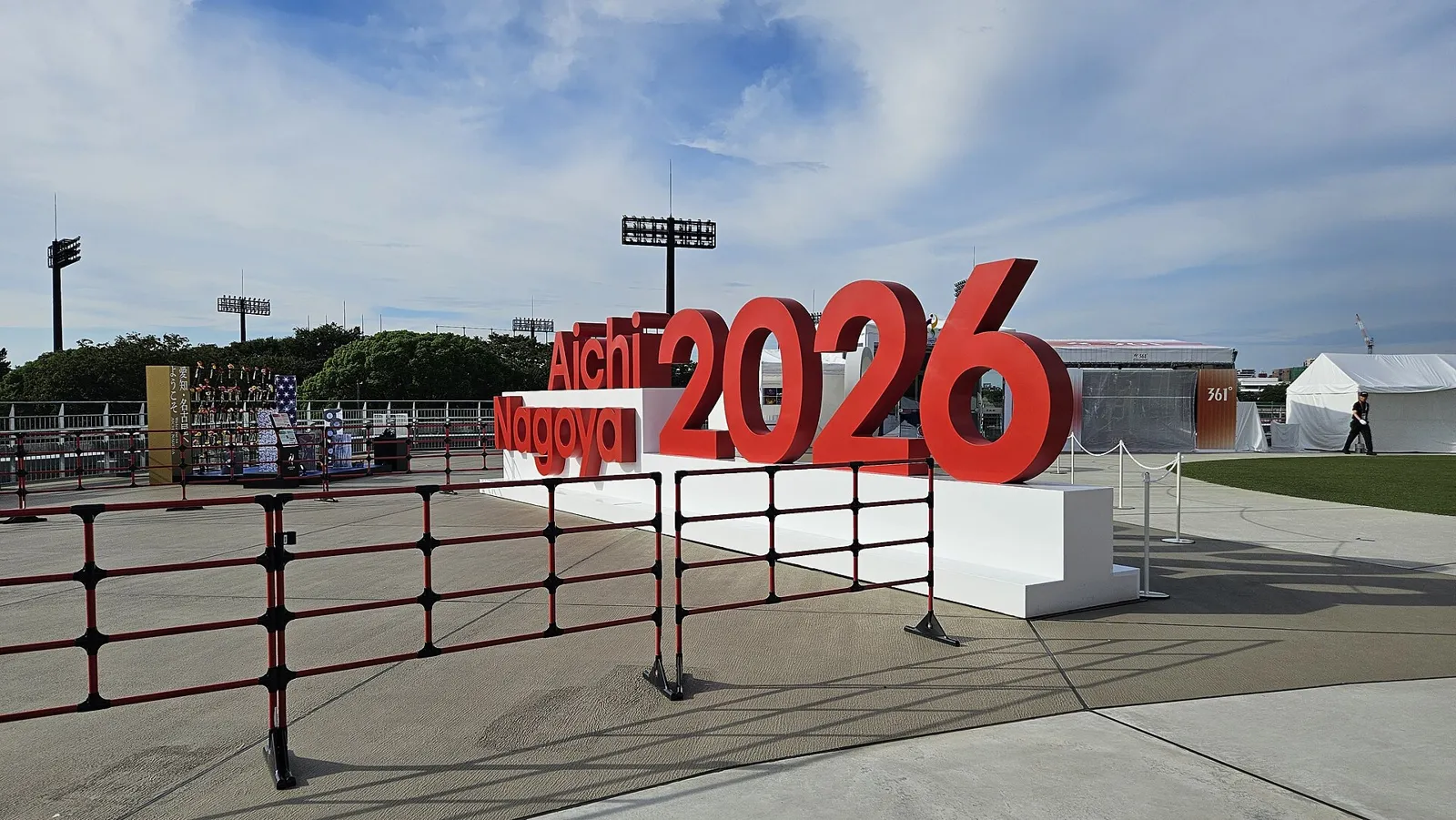
Representative image · Archive photo · Not an on-site photo of the event in this article · Photo: Wikimedia Commons (Aspere), CC0
Related Reading
· "From 49 Gold to 42, This Time 40 to 45"… Asian Games Gold Target: Third Place Overall
Weit Editor · View Profile and More Articles